Last Updated on February 22, 2026
Most lead-generation campaigns hit the same wall: you increase budget, you get more leads, and margins quietly get worse. The usual go-to solution is to enforce a strict CPL or target CPA and scale by widening targeting and bidding into cheaper traffic.
The main problem is that the algorithm is still optimizing for lead volume rather than business outcomes, which means the system keeps finding conversions that look efficient inside the interface but do not necessarily translate into profit.
The solution in two words is: outcome optimization.
Today, we’ll see how to efficiently scale Google Ads lead generation using Maximize Conversion Value and tROAS, including how to decide whether you should bid on profit, closed deals, qualified leads, or another deeper-funnel proxy based on signal depth, freshness, and volume.
I will also show you two real case studies that cover both situations: one where profit values are available quickly enough to use value-based bidding immediately, and one where the profit signal must be built first by optimizing deeper funnel events.
This was written with Google Ads in mind, but everything here will work in somewhat the same way in Microsoft Advertising, Meta, TikTok, and any other algorithm-based advertising platform.
Why Traditional Lead-Gen Scaling Breaks
The Mechanics of Volume-Based Optimization
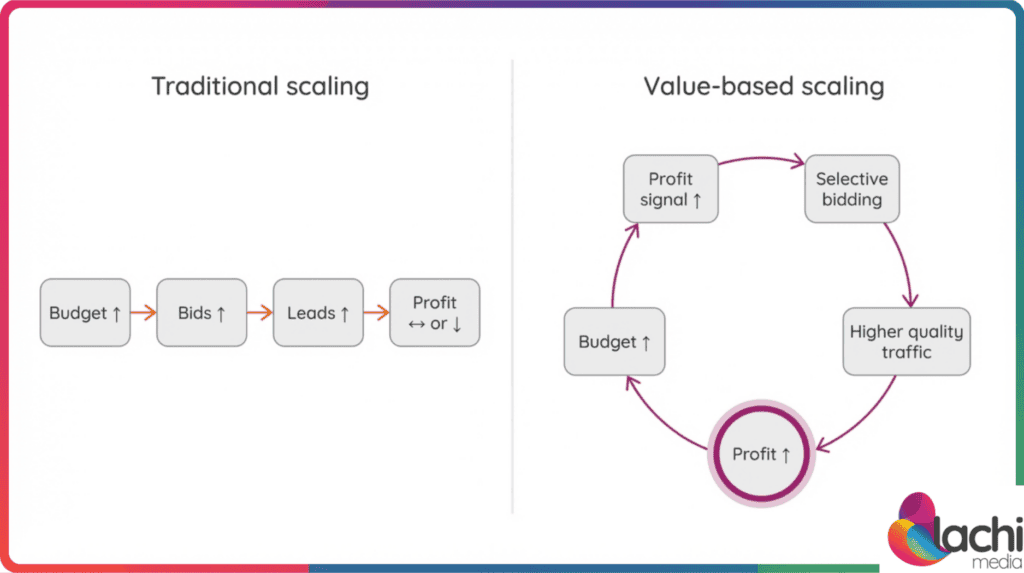
Most lead-generation accounts are scaled through predictable adjustments. Budgets are increased, bids are relaxed, keyword coverage expands, and targeting is widened. As long as cost per lead remains within an acceptable range, the account appears stable.
The issue is that cost per lead is not a business metric. It is an acquisition metric. It measures how efficiently traffic is converted into leads, not how efficiently revenue or profit is produced.
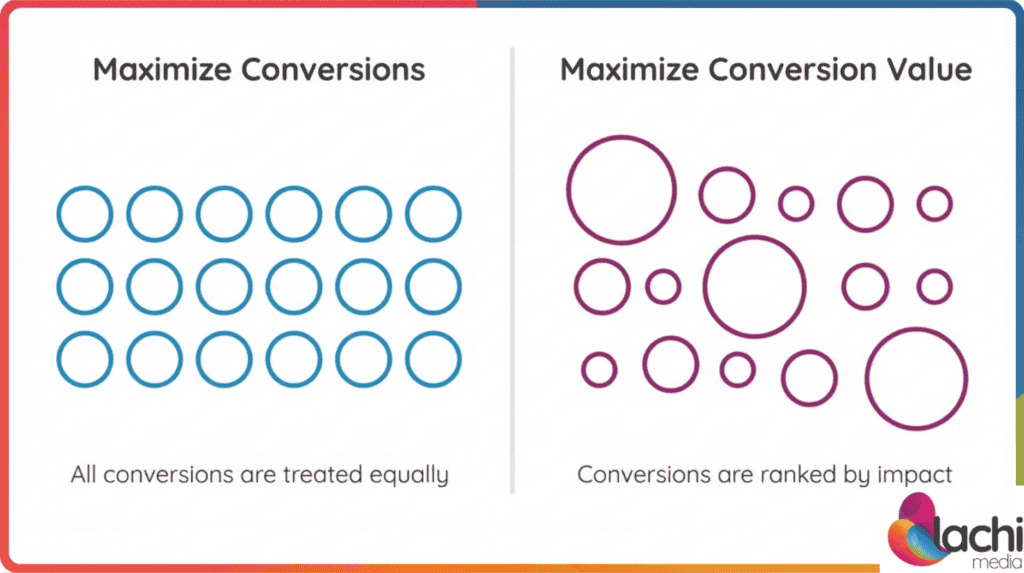
When Google Ads is optimized for conversion count, every conversion is treated as identical by definition. A lead that never answers the phone and a lead that becomes a high-margin customer carry the same weight in the bidding system. A low-margin job and a highly profitable one are indistinguishable to the algorithm if both are counted as conversions.
This behavior is not a flaw. It is a consequence of the optimization target.
Maximize Conversions answers a single question:
“How cheaply can I generate conversions?”
It does not answer:
- Which conversions close
- Which conversions generate revenue
- Which conversions produce profit
- Which conversions are worth scaling
As long as those distinctions are invisible, Google optimizes toward volume efficiency rather than business efficiency. This is why many accounts reach a point where additional spend reliably increases leads but does not improve profitability.
At that stage, execution-level optimizations rarely solve the constraint. Adjusting bids, match types, or campaign structures does not change the fundamental objective.
What Value-Based Bidding Changes
Redefining Success Inside the Algorithm
Value-based bidding does not alter targeting mechanics. It alters decision criteria.
With Maximize Conversions, success means increasing conversion count.
With Maximize Conversion Value, success means increasing total value.
With tROAS, success means increasing value relative to cost.
Once conversion value becomes the optimization objective, Google is allowed to rank traffic based on expected economic impact rather than the probability of generating any conversion. This enables the system to:
- Bid more aggressively on queries and users associated with higher-value outcomes
- Deprioritize traffic that converts easily but monetizes poorly
- Accept higher acquisition costs when downstream value justifies it
- Reallocate budget toward segments that generate disproportionate profit
The algorithm itself does not become smarter. The objective becomes more aligned with business reality.
This shift often results in higher CPC. Higher-intent auctions are typically more competitive and therefore more expensive.
Why Fake Values Break Optimization
Value-based bidding only works when conversion value reflects real differences between outcomes.
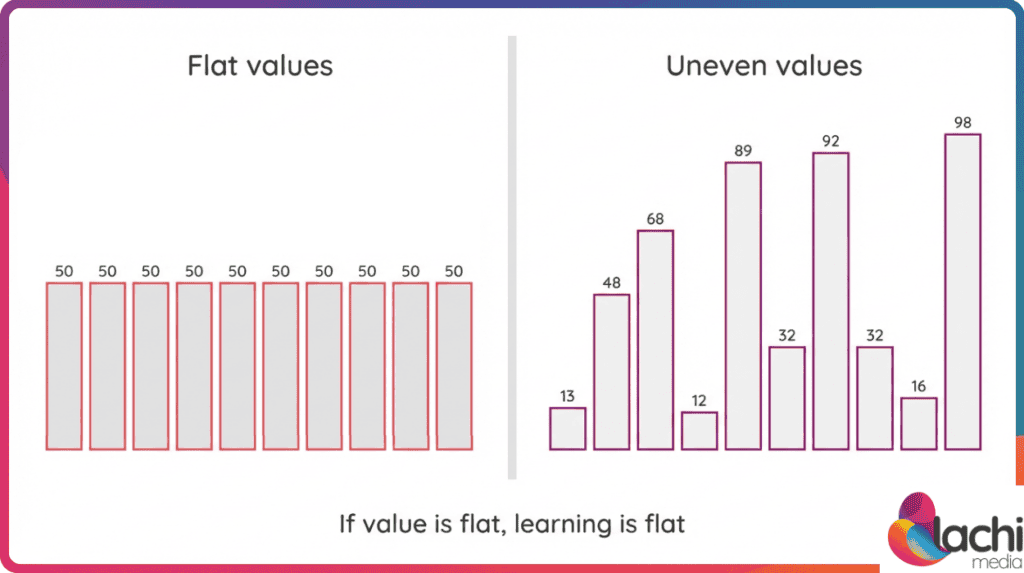
If every qualified lead is assigned the same value, the system cannot distinguish between leads that consistently close into profitable work and those that do not. If every closed deal is assigned the same value, the system cannot prioritize larger or more profitable transactions.
In both cases, conversion value collapses into conversion count.
Invented values are worse than no values because they introduce misleading signals. Instead of optimizing for real economic differences, the algorithm optimizes around artificial uniformity.
Only two value types are meaningful for bidding:
- Actual monetary outcomes
- Gross profit derived from consistent accounting logic
Why Gross Profit Is a Better Signal Than Revenue
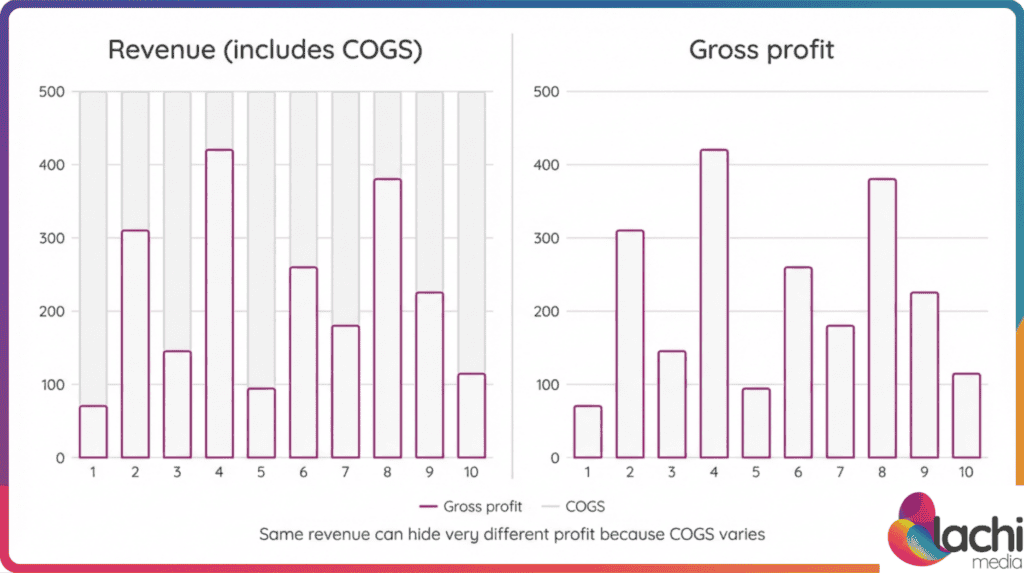
Revenue alone does not capture economic reality. Two transactions can generate identical revenue while producing radically different profit.
If bidding is optimized toward revenue, Google scales top-line volume even when profit variability introduces risk. Gross profit reflects the resource that actually funds operations and growth.
Optimizing toward profit aligns bidding decisions with the business constraint that determines sustainability.
The Core Rule
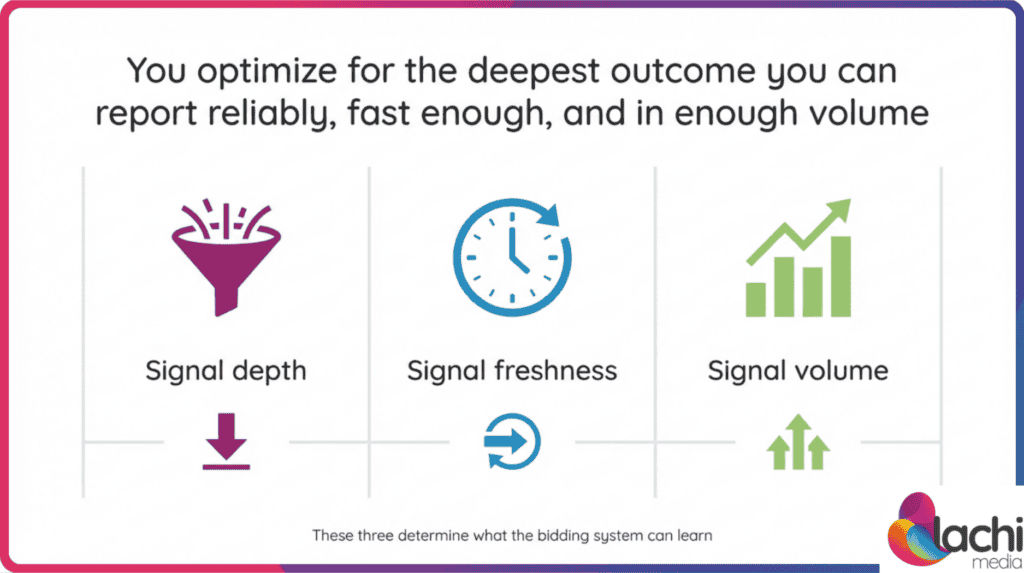
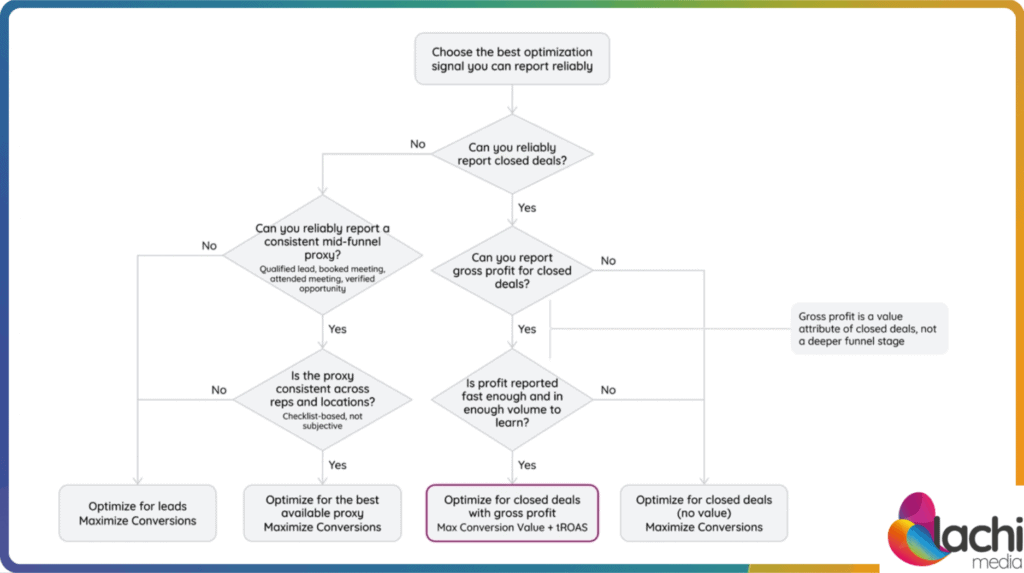
You optimize for the deepest outcome you can report:
- Reliably
- Fast enough
- In enough volume
This rule is mechanical rather than conceptual. Google cannot learn from signals that are inconsistent, delayed, or statistically sparse. When those conditions fail, value-based bidding and volume-based bidding behave similarly because the model lacks usable information.
How to Decide What to Optimize For
Decision Framework
| What You Can Report | Enough Volume | Optimize For | Bidding Strategy |
|---|---|---|---|
| Closed deals with gross profit | Yes | Profit | Max Conversion Value + tROAS |
| Closed deals with gross profit | No | Best proxy below it | Maximize Conversions |
| Closed deals without value | Yes | Closed deals | Maximize Conversions |
| Qualified leads or meetings | Yes | Best proxy | Maximize Conversions |
| Leads only | Yes | Leads | Maximize Conversions |
Practical Implication
If closed-won volume is low, optimizing for conversion count or conversion value rarely produces meaningful differences. The correct move is to improve signal depth and sale rate through deeper proxies until profit signals become viable.
Use Case 1: Home Services
Home services campaigns often generate outcomes where revenue and profit are realized shortly after the initial interaction. This makes profit signals sufficiently fresh and frequent for value-based bidding.
Experiment Overview
A controlled test compared Maximize Conversions vs Maximize Conversion Value using tROAS (you can read more about the test here in this case study, where using Maximize Conversion Value with tROAS helped us scale a local home services company by 30% while improving ROAS by 12%).
Results included:
- Higher return on ad spend under value optimization
- Increased spend with maintained efficiency
- Scalable growth without margin collapse
Why It Worked
Value existed, value arrived quickly, and value volume was high. These conditions allowed Google to rank traffic by expected profitability.
Use Case 2: Car Dealerships
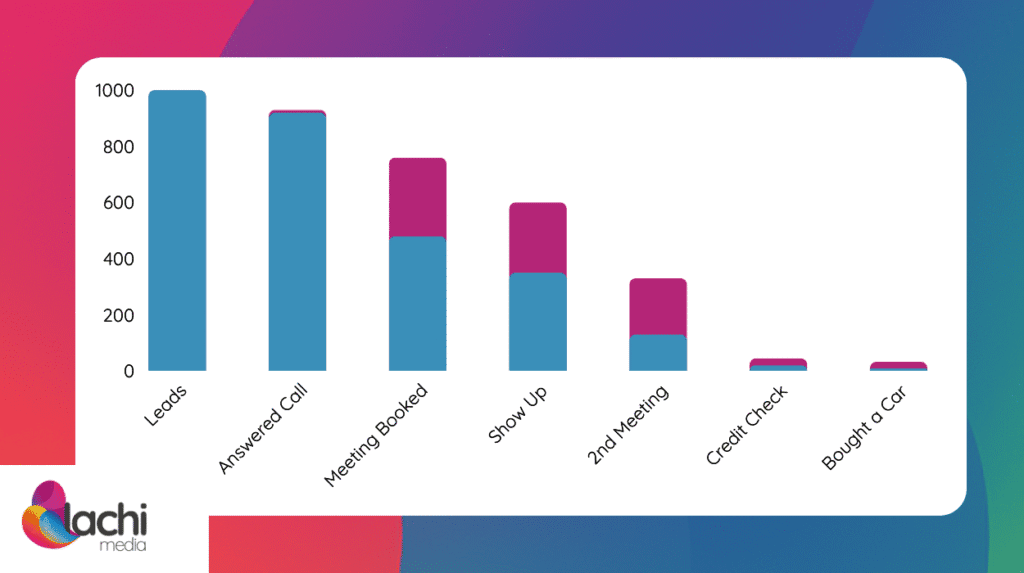
Building the signal before the value exists, this use case is based on a case study that takes advantage of reporting down the funnel events and translates them into bottom-line growth.
Initial Constraint
Vehicle purchases are sparse relative to leads, and profit is realized late. Direct value optimization is not feasible when sales signals lack volume and freshness.
Signal Engineering
Optimization was built on deeper proxies:
- Answered calls
- Booked meetings
- Show-ups
- Credit checks
Improvements in these signals produced substantial increases in final sales without increasing spend.
Interpretation
This phase was not value-based bidding. It was signal construction designed to raise sale rate and create viable value signals.
Why High-Ticket Local Behaves Like Dealerships
High-ticket local services share structural similarities with dealership funnels: long sales cycles, low close rates, and high variance in deal value. Optimization typically begins with qualified proxies rather than profit.
How Gross Profit Is Calculated
Priority order:
- Actual deal minus actual costs
- Category or service margin models
- Fixed margin assumptions only when necessary
Consistency matters more than precision.
How Offline Conversions Fit In
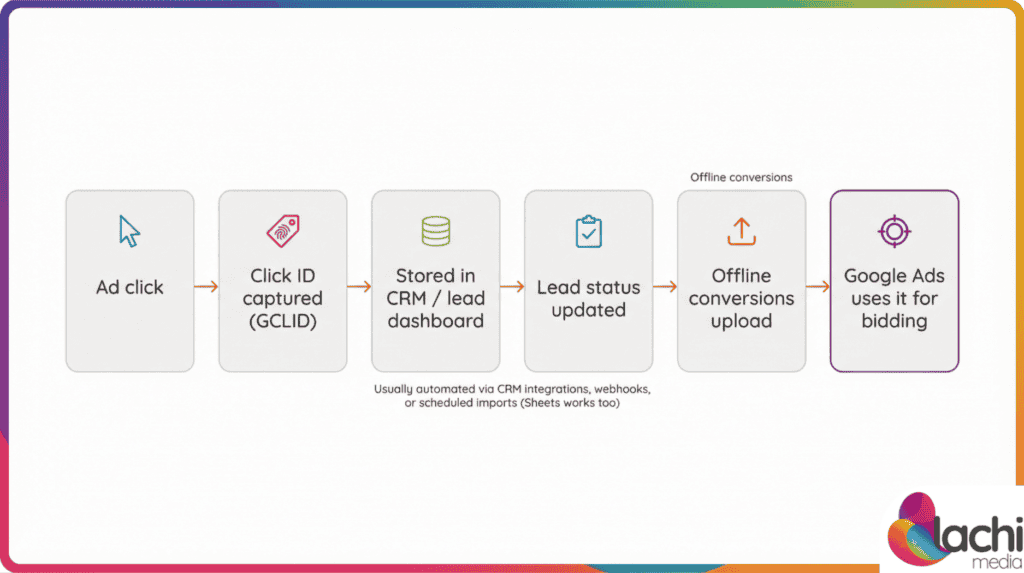
Click → Identifier captured → CRM or Google Sheet → Lead stage updated → Conversion uploaded → Bidding system learns
Common fields:
- GCLID
- GBRAID
- WBRAID
- Timestamp
- Conversion name
- Conversion value
What to Measure
| Signal | Primary KPI | Diagnostic Focus |
|---|---|---|
| Leads | Cost per lead | Traffic quality |
| Qualified leads | Cost per qualified | Qualification consistency |
| Sales | Cost per sale | Signal depth |
| Profit | ROAS on profit | Scaling stability |
Why Value-Based Scaling Is Safer
| Traditional Scaling | Value-Based Scaling |
|---|---|
| Optimizes for volume | Optimizes for outcomes |
| Treats conversions equally | Differentiates by profit |
| Can erode margins | Protects margins |
FAQs
Is tROAS only for ecommerce
Can I use tROAS without real value data
What if sales cycles are long
How many sales are required for tROAS bidding?
What if I can report closed deals but not gross profit?
Should I assign estimated values to qualified leads?
My CPC spikes when I switch to Max Conversion Value. Is that normal?
Do I need GA4 for this?
How do I avoid inconsistent qualification across sales reps?
Should I optimize for revenue or gross profit?
Final Thoughts
Value-based bidding does not inherently scale campaigns. It aligns Google’s optimization target with how the business actually creates profit. Once profit signals become visible, frequent, and reliable, scaling behavior changes from volume expansion to outcome selection.